
What is biofilm and why it keeps coming back in washrooms
If your washrooms suffer from persistent odours, recurring blockages or inconsistent cleanliness, the issue may not be your cleaning routine.
It may be biofilm.
Biofilm is one of the most common, and most overlooked causes of ongoing washroom problems in commercial environments.
It forms out of sight, resists traditional cleaning methods, and quickly regenerates if not properly addressed.
Understanding what biofilm is, and why it keeps coming back is key to moving from reactive cleaning to a more effective, preventative approach.
What Is Biofilm?
Biofilm is a layer of microorganisms (bacteria, fungi and organic matter) that forms on surfaces where moisture is present.
In washrooms, this typically develops in:
- Urinals
- Toilets
- Sink pipes and drains
- Floor drains
- Hidden pipework
These microorganisms produce a protective matrix, allowing them to:
- Adhere to surfaces
- Feed on organic waste (urine, grease, soap residue)
- Protect themselves from cleaning chemicals
Biofilms can be highly resistant to disinfectants and are capable of persisting even after routine cleaning.
Over time, this creates a living, growing layer of contamination within your washroom system.
Why Biofilm is a problem in washrooms
Biofilm is not just a hygiene issue, it’s a system-level problem that drives multiple operational challenges.
Persistent odours
Biofilm feeds on organic matter and releases gases as it breaks it down.
This is often the root cause of:
- Urinal smells
- Drain odours
- Lingering washroom odour despite cleaning
If odour returns shortly after cleaning, the underlying biofilm layer is typically still present.
Recurring blockages
As biofilm builds, it traps:
- Uric scale
- Hair
- Grease
- Debris
This gradually restricts flow and contributes to:
- Slow drainage
- Frequent blockages
- Increased reactive maintenance callouts
Reduced cleaning effectiveness
Traditional cleaning approaches often:
- Target visible surfaces only
- Fail to penetrate the biofilm layer
- Deliver short-term results
This is why washrooms can appear clean but still smell or underperform.
Why Biofilm keeps coming back
Even after cleaning, biofilm returns, often faster than expected.
It protects itself
Biofilm forms a defensive barrier that shields microorganisms from harsh chemicals.
Industry guidance, including from the British Institute of Cleaning Science, highlights the importance of targeting contamination beyond visible surfaces, particularly within systems such as drains and pipework.
It regenerates rapidly
Even if partially removed, biofilm can:
- Begin reforming within hours
- Re-establish within 24–48 hours in high-use environments
All it requires is moisture, organic matter and time.
Cleaning is often reactive, not preventative
Most washroom maintenance is focused on:
- Immediate issues
- Surface-level cleanliness
However, biofilm exists below the surface, meaning it continues to develop between cleans unless actively managed.
What we see across commercial washrooms
Across high-footfall environments, including hospitality, transport hubs and large FM-managed estates, recurring washroom issues are rarely caused by poor surface cleaning alone.
In most cases, the root cause is biofilm within pipework and drainage systems, even where fixtures appear visibly clean.
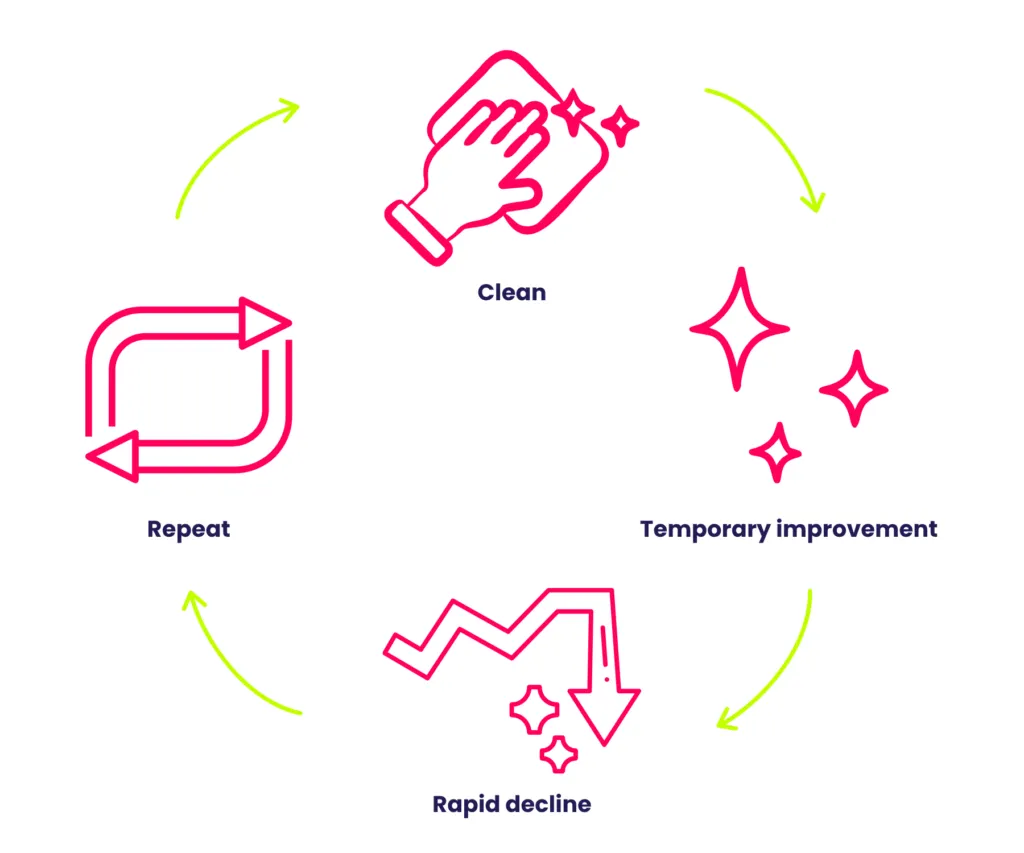
This is why many sites experience a cycle of:
Why traditional cleaning methods don’t solve biofilm issues
Bleach and acid-based cleaning products do remove visible scale, providing short-term improvement in odour, but this is only a temporary solution.
These types of products don’t break down the biofilm structure, therefore the organic matter that feeds the biofilm remains, and the issues keep coming back.
How to effectively manage biofilm
Target the source, not just the surface
Effective solutions must:
- Penetrate biofilm layers
- Break down organic matter at the source
- Work within pipework and drainage systems
Use biological and oxidative cleaning approaches
Technologies such as biotechnology and advanced oxidative chemistry are designed to:
- Disrupt biofilm structure
- Break down the organic material that sustains it
- Support ongoing system cleanliness
Thrive’s formulations combine these approaches, enabling them to work beyond visible surfaces, penetrating deeper to address issues at source.
Implement a preventative maintenance routine
Rather than reacting to issues as they arise, facilities should:
- Maintain systems continuously
- Prevent build-up before it becomes problematic
- Reduce reliance on emergency interventions
What this means for facilities
If biofilm is not being actively managed, sites typically experience:
- Persistent odour complaints
- Repeated blockages and callouts
- Increased chemical usage
- Inconsistent washroom standards
Using solutions designed to work within the system, facilities can:
- Reduce reactive maintenance with products like URIZAP Shock, URIZAP, URIZAP Daily, DRAINZAP and SLUDGEZAP
- Improve washroom experience
- Deliver more consistent, long-term performance by eliminating limescale with products like SCALEZAP, SCALEZAP 360 Foam or Toilet Cleaner
A smarter approach to washroom maintenance
Biofilm is not a one-off issue; it’s an ongoing process.
Facilities that shift towards preventative, system-based cleaning strategies typically see improved washroom stability, fewer disruptions, reduced costs and improved user experience
Speak to our team to explore how a preventative approach can reduce odours, blockages and ongoing maintenance across your facilities.